by Lorelei O’Donnell
Choosing the Cornerstone of Courage “Courage is rightly considered the foremost of the virtues, for upon it all others depend.” – Winston Churchill
During the Institute, from day three to graduation, I had a personal emphasis on courage. Throughout the year, I learned different facets of courage and was challenged to embolden my faith, actions, and character.
What Does Courage Mean?
Our first assignment at the Institute was a speech on one of the three pillars of character. As we drew pillars from a hat, I hoped for the other pillars but not courage… God had other plans. Being stretched to speak on this subject was just the beginning of my year of learning how essential courage is in strong character.
What do you imagine when you think of exercising courage? Admittedly, I have always pictured bold actions, but there is a nuanced side to courage that is an internal choice. Merriam-Webster defines courage as “mental or moral strength to venture, persevere, and withstand danger, fear, or difficulty.” The Institute showed me three ways courage is cultivated: confident actions, vulnerability, and trust.
Living a Life of Courage
Courage takes tangible form in our actions in innumerable ways. It means being prepared to answer with boldness when questioned on your faith and acting on that preparation. When someone with opposing moral views inquires or disputes, courage means pushing past simple answers and having an eagerness to go deep into truth with them. Courage is sharing unpopular opinions instead of keeping to yourself, followed by a willingness to have civil discourse and hear all views and facts against your theory. The Institute created a culture where this was encouraged and fostered. Peers and leaders of high caliber urged me to share my uncommon views, and I gained valuable knowledge through these dialogues. Additionally, the Institute placed us in positions to converse with diverse audiences, such as street interviews, school board meetings, and town hall assemblies.
Success Through Vulnerability
Vulnerability is an ever-changing form, but is always better when done willingly. Over the past year, I realized choosing vulnerability leads to recognizable success and better outcomes in growth and learning. It involves diving into discussions between viewpoints, perhaps knowing you’re going to lose, but wanting to discover more. It is being that person in class, when the majority are nodding along, who raises their hand to ask what seems the most basic question. The connections that form at the Institute between classmates can become like family, and because I was vulnerable, I found wonderful friends and wise counselors. It takes vulnerability to be of strong character, and vulnerability takes courage.
Wholehearted Trust
Trust is born from courage, and I never acknowledged that connection until my year at the Institute. When someone wants to serve you, it demands courage to let them, trust their intentions, and see their genuine care. Additionally, courage is needed to trust wholeheartedly, allow them to see your fully authentic self, and act accordingly in the truth. It takes courage to trust in an unconditional love that isn’t affected by your actions, but is based on your beloved identity. We have all heard ‘courage is not the absence of fear’; instead, I’d present ‘courage is the presence of trust’.
The “Exercise” of Courage
We all have the virtue of courage. The question is, do we choose to exercise courage in everything? It’s easy to do something big, brave, and feel courageous, but shy away from smaller decisions at a more personal level. It is a choice to challenge yourself more and more every day, to present yourself exposed to friends and leaders, to trust enough to proceed despite the risk of failure or pain. Churchill was accurate in stating that all other virtues depend on courage. At the root of all actions and decisions, it takes courage to be patient, to humbly share wisdom, to show compassion, and to work diligently. These are attributes of a person with strong character that require courage to build. Courage is a choice, then a habit, and ultimately a virtue built from active decisions.
In my year at the Institute, I chose to grow in courage by exercising this virtue through acting in discomfort and trusting. Will you choose to grow your courage?
________________________________________
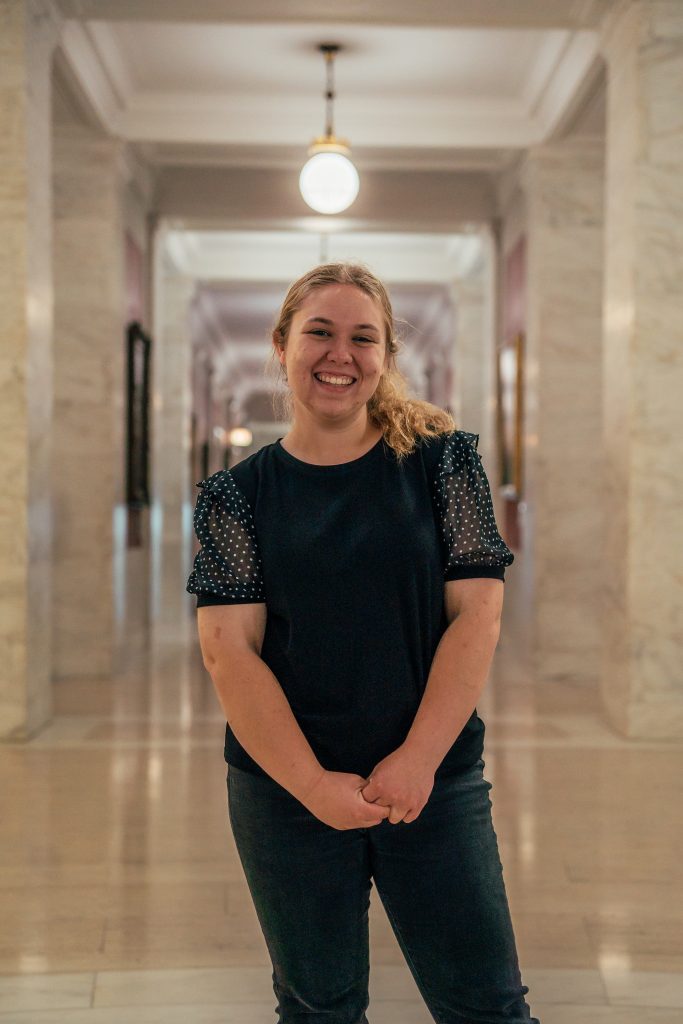
Lorelei O’Donnell is a Patriot Institute alumni and a four-time Leadership Congress graduate. When not studying or working, she enjoys outdoor adventures, good books, and deep conversations.