
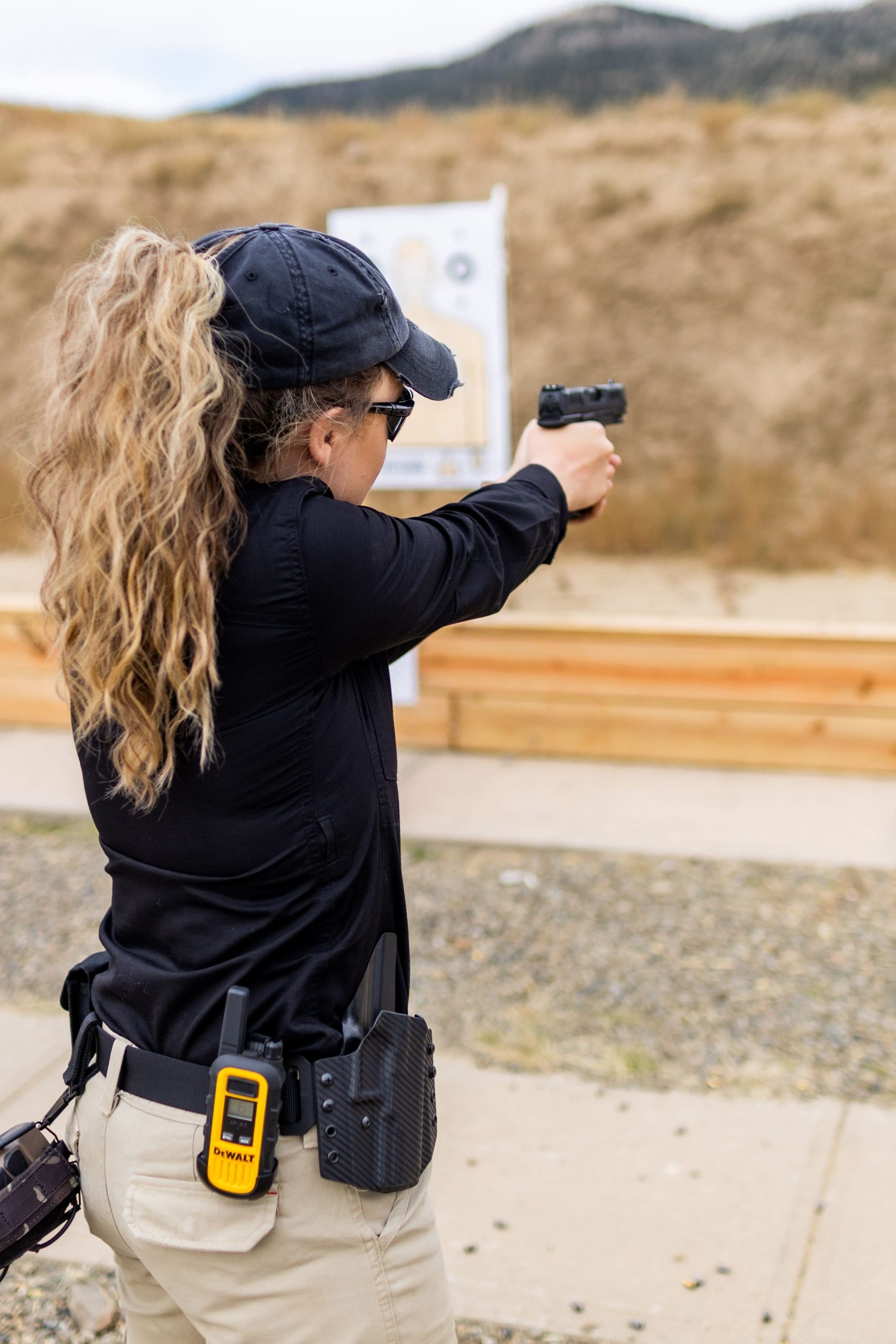
You keep (or are considering keeping) a gun to protect yourself and those you love, and for good reason. Without question, a gun is the most effective tool for self-defense available to you. But what else is there? Besides owning a gun, what steps are you taking to ensure that you are prepared to use it effectively to defend yourself, if your life or the life of a loved one is ever in danger? In this blog, we will discuss the importance of having the right mindset about your weapon.
Step 1: Get the right mindset
Mindset is arguably the most important aspect of self-defense. A proper mindset about your weapon and about self-defense will set you up for success, and, conversely, an improper mindset will be a nearly insurmountable obstacle to success.
Let’s look at several components of a proper mindset.
Understand and accept that you are “unconsciously incompetent”.
One of the saddest things for me when speaking to a prospective student is for that person to tell me that he doesn’t need my services because “I already know how to shoot”. This person’s mindset is built on a false sense of security. I’ve had hundreds of students who “knew how to shoot” before they attended the class. After taking the class, they discovered that they didn’t know how to shoot after all, at least not effectively enough to save their own life from a criminal attacker.
I don’t blame these people. In fact, they can’t help it. They are what is known as “unconsciously incompetent”.
Having a mentality that is “Unconsciously Incompetent” means you don’t know what you don’t know.
Everyone starts out being “Unconsciously Incompetent”. It’s the default level for any skill, be it shooting, skiing, or underwater basket weaving. You don’t know what goes into the skill, and you wouldn’t even know what questions to ask.
Unfortunately, the vast majority of gun owners are unconsciously incompetent about their guns and how to use them for self-defense. Even people who have been shooting for years are often unconsciously incompetent. Guns lend themselves to overconfidence because a basic understanding of their operation can still generate an exciting, if ineffective, result.
Because they can load the gun, make it go “bang”, and cause a hole to appear somewhere in their target, they assume they know what they need to know.
People with a minimal amount of training are often the most overconfident about their abilities. This is a documented phenomenon known as the “Dunning-Kruger Effect”. This effect states that the more inexperienced a person is, the more likely that person is to significantly overestimate their ability. It explains perfectly why so many people don’t believe they need training like the type I provide. Because they have a cursory understanding of guns and shooting, their confidence level is considerably higher than their competence level.
Understand that a gun is not the solution to most problems.
There is an old saying: When your only tool is a hammer, everything looks like a nail. Carrying a gun causes some people to look for an excuse to use it.
Let me be candid: If you’re looking for a reason to use a gun, you should not carry a gun.
A gun is a tool of last resort. You should pray that you never have to use it, because if you do, your life will never be the same. Using deadly force brings many consequences, including legal, social, financial, and psychological repercussions. You should only use deadly force when absolutely necessary to protect innocent life.
There is a flip-side to this coin, however. When your gun IS the solution, nothing else will do. When a 5-foot, 100-pound young woman encounters four men, twice her size, who are intent on raping and murdering her, what tool gives her any real chance at stopping them? When a psychopathic criminal hopped up on PCP breaks into an elderly widow’s home in a drug-induced homicidal rage, what hope does she have of preventing her own murder? When a disgruntled worker storms into his office building with a shotgun, intent on causing as much mayhem as possible, what will cut short his killing spree?
It is for these situations that we keep and carry guns. In these instances, there is no other defensive tool that will so effectively allow you to prevent tragedy from befalling you or those around you. The gun is the great equalizing tool that gives you a fighting chance.
By all means, carry a gun. And pray you’re never in a situation where you have to use it.
Commit to developing your situational awareness.
Awareness of your surroundings is the greatest defensive tool at your disposal. The great thing about mental awareness is that it is an effective self-defense tool that you can carry with you everywhere, even if you are not carrying a gun. Simply being aware makes it significantly less likely you will have to use your gun in self-defense, because you will naturally avoid dangerous people and situations. However, if you see the fight coming, you are much more likely to prevail.
By the same token, if you are caught by surprise, you have almost no chance of success unless your attacker is completely inept. So, set yourself up for success. Develop and practice your ability to stay aware of what is happening around you. Start right now.
When a situation arises, be prepared.
You must be willing to fire on your attacker if necessary to save your life
Some people keep a gun, expecting that all they will have to do is display it to dissuade an attacker. They think simply racking the shotgun will scare off the burglar. Or they think that they can drive off an attacker with warning shots (which are a bad idea for many reasons).
Could those things work? Sure, maybe. And if they do, that’s a win. But what if they don’t? You must be prepared, mentally and physically, to fire on your attacker. And I’m not talking about shooting to cause a flesh wound, such as a leg shot. I mean firing incapacitating shots into the thoracic cavity.
Criminals are generally pretty good at reading people. They will likely know, simply by your demeanor, whether or not you will use your weapon against them. If they sense weakness, they may attack anyway, and the first thing they are going to do is try to take the gun from you. The last thing you need is for them to use your own weapon against you.
Human life—how to think about it.
You must be prepared for the possibility that your attacker will die
The vast majority of human beings are naturally wired to avoid killing a fellow human. We should be very grateful for this, as this is what allows us to live together peaceably. It is only the psychopathic and sociopathic among us who lack this compunction to do harm to others.
However, this natural resistance can be a double-edged sword. Even when faced with a deadly threat, many people will find themselves unwilling to do what is necessary to prevail. As unbelievable as it may sound, a subconscious concern for their attacker’s well-being causes them to hold back, giving their psychopathic attacker the advantage.
Understand, you are not trying to kill your attacker. In a self-defense situation, your goal is simply to end the deadly threat against you or your loved ones. However, the possibility exists that your attacker may die because of your use of deadly force in response to the deadly threat. This is something that you must accept ahead of time in order to ensure you act decisively in the critical moment.
It is not your goal to kill your attacker, but you must be willing to accept that your adversary may die as a result of your actions.
Decide to be the victor, not the victim.
Above all, make up your mind that you will do everything in your power to avoid becoming a victim. Victory should be the only acceptable outcome in a self-defense encounter. You should be absolutely dedicated to doing what is necessary to prevent yourself from being victimized.
Dedication is arguably the most important determining factor in who wins a fight.
Developing this dedication takes time and training, but it can start right now by simply making the decision in your own mind that you will commit to being the victor instead of a victim. Without this commitment, much of the rest of your preparation is academic.
We covered a lot of material, but understanding what a proper mindset looks like builds the framework for how you safely and responsibly view, handle, and train with your gun. Next time, we’ll look at getting a gun, types of guns, and help you think through what would work best for you.
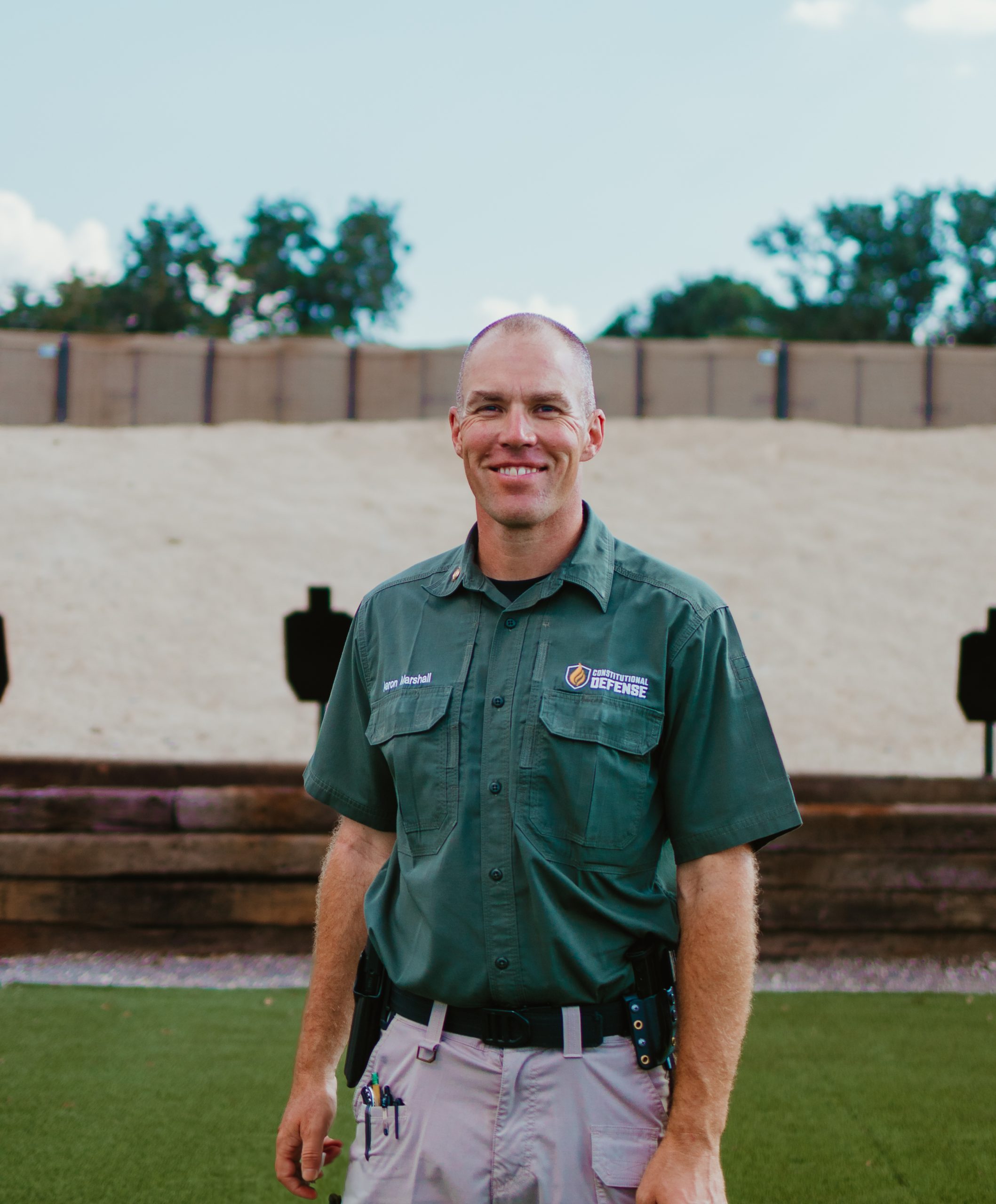
Aaron is a retired Army Reserve officer & a two-time combat veteran (Iraq & Afghanistan). He left a career in IT to become a firearms instructor. In over fifteen years as an instructor, he has trained soldiers and civilians, & attained instructor certifications from Glock, Sig Sauer, & the NRA Law Enforcement division. He also worked for three years as a full-time range master at Front Sight, the country’s largest private firearms school, and has personally trained over 6000 students. When he’s not teaching, he enjoys real estate investing, stock market trading, board games, and ballroom dancing with his wife Brandi.